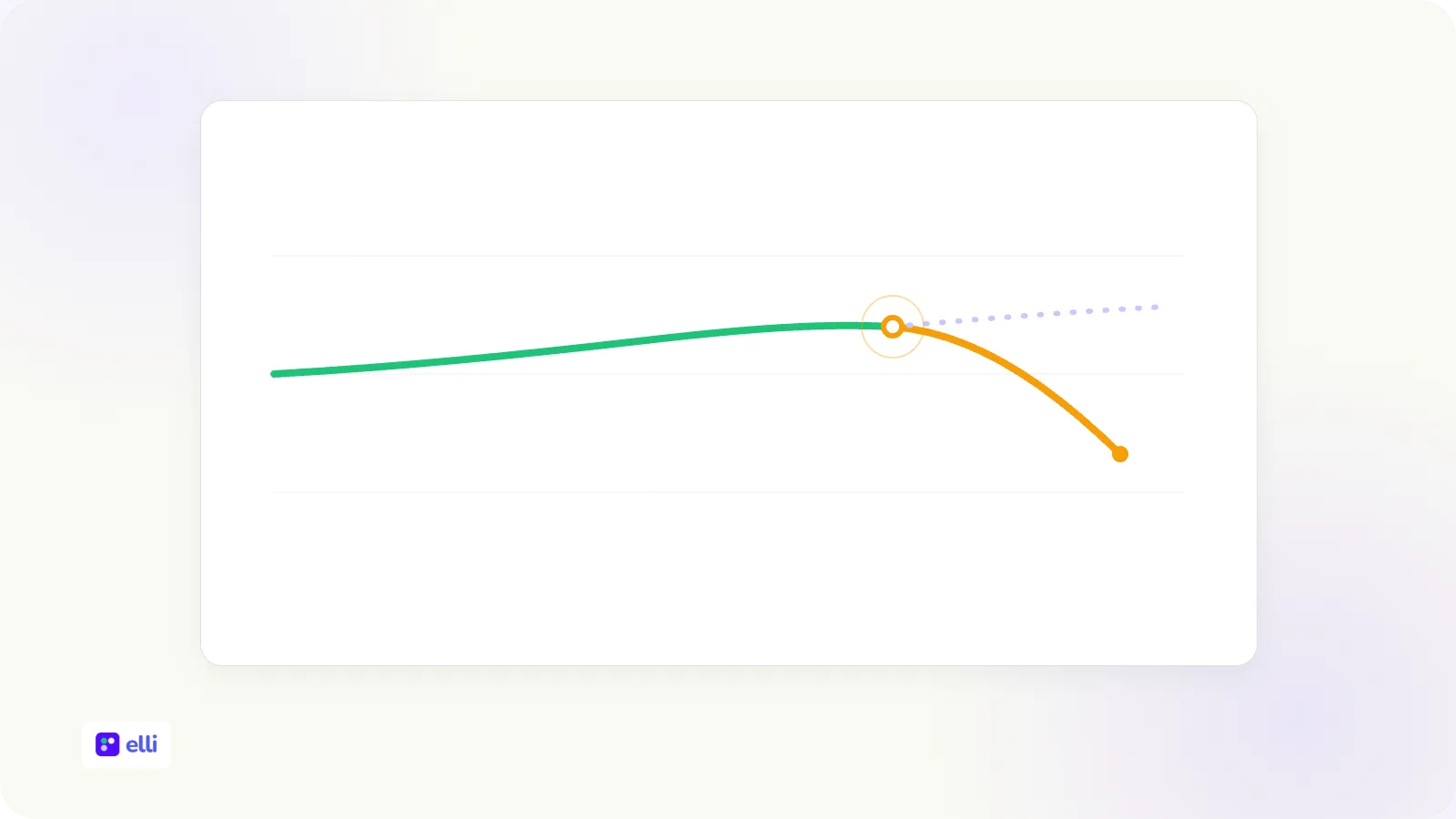
Classic absence reports register damage after the fact. They show how many working days were lost, but never explain why people actually drop out. Without insight into team dynamics, absenteeism analysis turns into an administrative record of missed opportunities. Fragmented data across different HR systems makes a holistic overview even harder, while managers lack tangible levers for stepping in early. Modern absenteeism analytics software breaks that vicious cycle by making smouldering risks immediately visible on the shop floor.
You’ll recognise the pain: reacting to historical percentages does not stop structural drop-outs. Discover how to choose the right absenteeism analytics software to surface the deeper causes of absence and steer proactively before people disengage. We’ll show how to gain real-time insight per team within days and to assign directly actionable steps to team leads, without extra administrative burden.
Key takeaways
- Learn why historical registrations fall short and how predictive indicators surface drop-out patterns early.
- Understand which core functions effective absenteeism analytics software must contain to monitor psychosocial risks and team dynamics in a structured way.
- Grasp the fundamental difference between static BI dashboards and action-oriented analytics platforms with genuine HR interpretation.
- Use a practical step-by-step plan to evaluate potential platforms objectively on GDPR, ISO standards and strict anonymity thresholds.
- See how modern tools are operational within 24 to 72 hours without complex IT projects or outside consultants.
Contents
- Why traditional absence registration falls short on structural absenteeism
- Key features of modern absenteeism analytics software
- How analytics platforms differ: classic dashboards versus predictive tools
- A step-by-step plan for selecting and evaluating absence software
- Implementation without a heavy IT project: start reducing absence right away
Why traditional absence registration falls short on structural absenteeism
Classic HR systems only register facts after the fact. An employee calls in sick, payroll notes the hours, and a report is compiled. This routine administrative approach never explains the actual context of the sick note. A broad definition of sickness absence shows that drop-out is rarely an isolated event: it is the result of smouldering friction. Traditional registration focuses on administrative damage limitation; modern absenteeism analytics software focuses instead on proactive risk detection.
For an effective, data-backed absence policy, looking back is not enough. Organisations need real-time signals to untangle drop-out mechanisms before they escalate.
The blind spot in classic absence percentages
Static absence percentages hide structural patterns. When HR only looks at historical quarterly figures, critical warning signals go unnoticed:
- Repeated short absence: Employees who are regularly absent for a few days often struggle with a mismatch between capacity and workload. This is the single biggest precursor of drop-outs lasting more than a year.
- Broken connections: Spreadsheets make no link at all between absence peaks, perceived leadership pressure or changes in shift rotations.
- Time drain on HR: Teams spend hours a week manually reconciling data, without producing a single usable insight that helps team leads.
From reactive damage control to preventive workforce intelligence
Proactive steering requires continuous data streams instead of static annual reports. Organisations in demanding environments, such as companies in tech and software, see absence risk grow exponentially under sustained overload. Continuous measurements signal psychosocial friction long before an official sick note follows.
This is where targeted absenteeism analytics software makes the difference. Through segment analysis, you identify groups of employees with a similar work experience. Managers no longer receive vague overviews, but concrete levers at team level. That enables them to have focused conversations about workload and collaboration exactly where the risks are building up.
Key features of modern absenteeism analytics software
Advanced analytics tools go beyond simple registration lists. Where traditional HR systems merely add up sick days, effective software detects structural patterns across departments. This lines up neatly with the statutory duty to run an absence policy , which pushes employers to map underlying risks in a planned way. Effective absenteeism analytics software combines hard absence figures with continuous surveys to make smouldering overload visible before absence occurs.
Continuous measurement and validated question sets
Classic, heavyweight employee satisfaction surveys fall short in dynamic organisations. Continuous measurement through short, frequent question sets prevents survey fatigue and produces a steady stream of reliable steering information. Scientifically validated questions trace friction around workload, autonomy and mutual collaboration long before physical complaints appear. Real-time updates let you see immediately how interventions affect the experience of work.
Security, anonymity and privacy safeguards
No analysis succeeds without guaranteed psychological safety on the shop floor. Employees only give honest feedback when anonymity is guaranteed technically and procedurally. A reliable platform therefore applies a strict anonymity threshold of at least fifteen respondents per team before data becomes visible. Full GDPR compliance and ISO 27001 certification guarantee that sensitive data stays protected. Role-based access rights also ensure that directors and team leads only see aggregated reports relevant to their area of responsibility.
Turning raw absence data into concrete action
Collecting data without focused follow-up leads to frustration. Modern absenteeism analytics software automatically converts complex correlations into a clear impact-effort matrix. Team-level scores show at a glance where teams are under pressure and which interventions deserve priority. Especially in fast, demanding environments such as the tech sector, this automated prioritisation helps assign focused actions directly to the right manager. Looking for ways to reinforce organisational agility during change? Deepen your thinking with the white paper on people-first change for a proven strategic approach.
How analytics platforms differ: classic dashboards versus predictive tools
Many organisations try to solve absence questions with generic business intelligence. A dashboard in Power BI shows correlations and charts, but lacks the HR interpretation needed to understand why people drop out. Without contextual reading, data stays stuck in abstract numbers. Effective absenteeism analytics software bridges the gap between raw figures and concrete interventions on the shop floor.
Classic HRIS modules versus specialised platforms
Standard modules inside HR and payroll systems register sick days, medical certificates and leave balances. They are built for payroll processing and legal accountability, not for prevention:
- Limited scope: An HRIS only registers absence once the employee is already at home. The mechanism behind it stays invisible.
- No root-cause analysis: Generic tools make no link between absence frequency and psychosocial workload.
- Complex setup: Building your own dashboards in BI packages takes months of consultancy and heavy data integrations, while operational usability stays low.
Specialised analytics, by contrast, identify the real drivers behind drop-outs. They produce directly applicable insight, without your becoming dependent on lengthy IT programmes.
elli’s approach to absence prevention
elli approaches absence analysis not as an administrative task, but as a lever for organisational strength. The platform combines continuous surveys with advanced workforce intelligence, specifically tuned to organisations of 200 to 2,000 employees. The built-in Survey Library contains more than 800 validated questions that surface friction at team level flawlessly.
From fifteen answers per team segment onwards, the first dashboard opens automatically. That guards anonymity while at the same time producing sharp, local steering data. Instead of passive charts, elli presents directly actionable steps per manager. That turns absenteeism analytics software from a backward-looking control tool into a proactive instrument that supports team leads in stepping in early.
A step-by-step plan for selecting and evaluating absence software
Selecting suitable absenteeism analytics software calls for methodical evaluation. Without clear criteria, the selection process quickly gets bogged down in non-committal demos and abstract promises. Use this five-part plan to test any platform objectively on operational value, ease of adoption and reliability:
- Determine organisational needs and analytical depth: Map clearly which insights are missing. Are you looking only for correlations, or do you want to surface underlying psychosocial patterns?
- Validate data protection and ISO standards: Check ISO 27001 certification, GDPR compliance and strict anonymity thresholds per reporting group.
- Test usability for managers: Examine whether team leads without an analytical background immediately understand the dashboards.
- Assess implementation speed: Choose technology that goes live in days without overloading your internal IT department.
- Check action-orientation: Test whether the system offers concrete interventions instead of only showing static charts.
Mapping internal needs and technical prerequisites
For organisations between 200 and 2,000 employees, heavyweight enterprise systems often overshoot the mark. They require months of configuration and saddle the organisation with unnecessary complexity. Choose targeted absenteeism analytics software designed for this size. Make sure user management works flawlessly and set high standards for data quality. Reliable steering information only emerges when measurements happen continuously and in a structured way.
Ease of use and leadership adoption
An analytics platform only pays off when leadership actually turns insight into action. Dashboards must therefore speak immediately: no complex statistical models, but transparent indicators per department. When the system feeds managers with ready-to-use action points, you prevent reports from gathering dust. This clear approach also strengthens works-council trust, because the focus lies on structural team support rather than on individual control.
Download the strategic white paper on people-first transformation
Implementation without a heavy IT project: start reducing absence right away
Classic software programmes regularly get stuck in slow roll-out phases. Complex integrations, months of consultancy and overloaded IT teams delay access to crucial insight. Modern cloud platforms prove it can be different. Effective absenteeism analytics software requires no heavy system changes to deliver strategic value on the shop floor right away.
Going live within 24 to 72 hours in practice
Cloud architecture makes it possible to be fully operational within 24 to 72 hours. No complex integrations, no consultants on the payroll. Thanks to ready-made templates, you start immediately with a representative baseline measurement. HR gets sight of the burning issues per department from day one:
- Immediate adoption: Teams complete short question sets without disrupting their day-to-day work.
- Sharp baseline: The platform pinpoints immediately where friction is creeping in inside shifts or divisions.
- No administrative ballast: Automated reports save managers hours of manual sorting.
Lasting impact on the cost of absence
Fast data collection lays the foundation for structural cost control. Early signals prevent smouldering overload from escalating into long-term work incapacity, the most expensive absence category for any organisation. By systematically evaluating interventions against live team data, you see immediately which measures pay off and which need adjustment.
This transparent approach also strengthens social dialogue. Consultation bodies receive clear, anonymised group reports that show factual trends instead of subjective opinions. In this way, well-considered absenteeism analytics software builds a proactive organisational culture. Leadership and HR act from objective parameters, long before drop-out threatens business continuity.
Choose proactive steering and cut structural absence
Looking back at historical absence percentages offers no answer to structural drop-outs on the shop floor. Lasting results only appear when you signal smouldering risks before people actually disengage. Focused absenteeism analytics software gives managers the context they need to steer in time and with substance. With more than 800 validated questions in the Survey Library, full ISO 27001 certification and a strict anonymity threshold from 15 respondents, you safeguard both data protection and depth of content.
Thanks to a live dashboard within 24 to 72 hours without an IT project, your organisation immediately has clear priorities and directly applicable actions. You turn fragmented HR data from an administrative record into a strategic lever for agile leadership.
Discover how elli turns absence risk into focused action
Don’t wait until absence costs escalate. Take charge of workforce continuity today and give managers the right levers to reinforce teams proactively.
Frequently asked questions about absenteeism analytics
What exactly is absenteeism analytics software?
It is specialised technology that brings together absence data, team dynamics and psychosocial risks to surface the deeper causes of drop-outs. Unlike classic registration tools, absenteeism analytics software does not only look at historical sick days after the fact. The platform analyses patterns through continuous measurement, so managers detect smouldering overload and steer proactively before people actually drop out.
How does absenteeism analytics software safeguard employee privacy?
Data protection sits at the centre through strict anonymity thresholds and role-based access rights. Dashboards only show aggregated data once a team has at least fifteen respondents. Individual answers are technically never traceable back to a specific employee. Full GDPR compliance and ISO 27001 certification also guarantee that all data processing takes place inside the European Union under the strictest security standards, without managers ever seeing medical details or individual scores.
From how many employees does an absenteeism analytics platform produce reliable data?
A representative baseline measurement starts from as few as 25 employees within an organisation. To run reliable team analyses without privacy risks, a team dashboard opens from fifteen completed responses per segment. Specialised platforms such as elli render optimally for mid-sized organisations between 200 and 2,000 employees. At that scale, complex departmental patterns become clearly visible and managers can intervene at team level in a focused way.
Can absenteeism analytics software really predict long-term absence?
Yes, modern absenteeism analytics software identifies early risk indicators that structurally precede long-term drop-outs. Think of an increase in frequent short absence, rising friction around workload and shifting team scores. By continuously correlating these signals with validated survey data, the system flags acute risks long before a doctor writes a certificate. That gives managers the chance to take preventive measures.
How quickly can an organisation start with absenteeism analytics without an IT project?
A modern cloud platform goes live within 24 to 72 hours. No heavy IT project, complex data integration or outside consultant is needed to get going. Thanks to pre-configured templates and validated question sets from the Survey Library, you launch a first baseline measurement straight away. As soon as employees respond, the platform automatically generates real-time reports and concrete action points per team lead.
What is the difference between an HRIS absence module and specialised workforce intelligence?
A classic HRIS module is mainly for administration, leave registration and payroll processing. You only see who was absent when, with no substantive reading. Specialised workforce intelligence combines hard trends with continuous surveys about the experience of work and psychosocial factors. It converts raw figures directly into an impact-effort matrix with concrete recommendations. In that way, absence follow-up transforms from passive registration into an action-oriented management tool.
Do managers have to complete data training to work with the software?
No, effective tools are designed for direct operational adoption without prior data training. Instead of complex statistics and dense BI charts, the system shows clear team-level scores and bite-sized recommendations. Managers see at a glance which dynamics inside their team need attention and which actions deserve priority. That enables team leads to hold focused conversations straight away, without administrative hurdles.